Drinking water supply for the rural population of the douar of Tighmarte (Morocco)

Drinking water supply for the rural population of the douar of Tighmarte (Morocco)

Drinking water supply for the rural population of the douar of Tighmarte (Morocco)

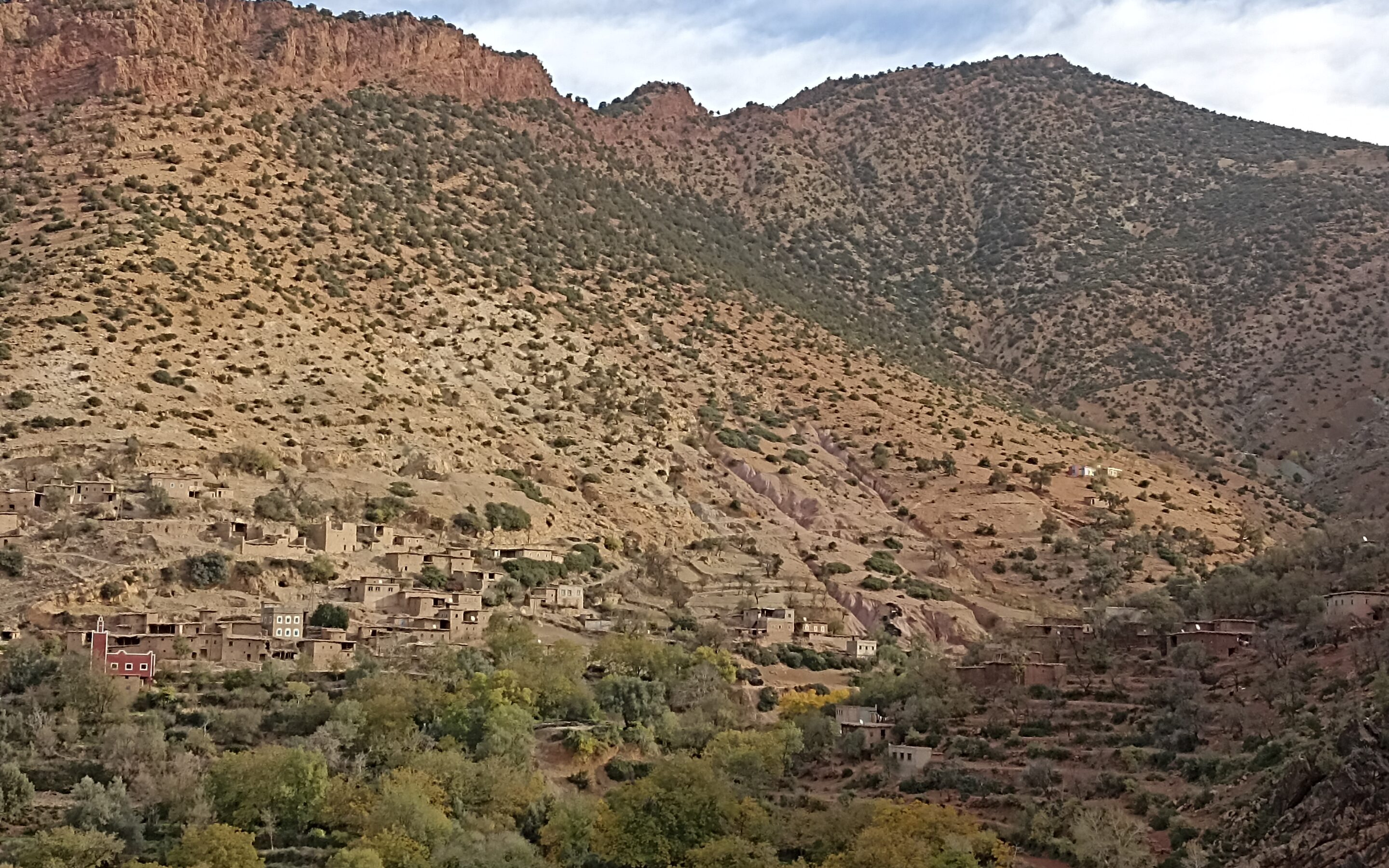
The volunteers of our organisation who make up the Board of Directors and the Projects Committee are committed to collaborating and seeking ways to mitigate the consequences of natural disasters in the event of any international emergency. In this case, following the earthquake in September 2023 in the Marrakech and High Atlas region, it was decided to start working to find partnerships with other organisations and to be able to provide a cooperative response to this disaster, perhaps not in the emergency phase but in the subsequent reconstruction phase. In order to gain a first-hand understanding of the reality of life for the inhabitants of the affected areas, at the end of November, a volunteer, together with members of other organisations, travelled to the High Atlas to explore possible collaborations and identify cooperation projects. In this way, Acción Solidaria y Logística became acquainted with the Association Jeunes de Tighmarte pour le Développement Local and the community of Tighmarte. After learning about their situation, their needs and the effect of the earthquake on the region, it was deemed feasible to initiate a collaboration to support the association’s projects to strengthen and empower the community.

The project is envisaged as a cooperative collaboration between the small community of Tighmarte, made up of 65 families, and our organisation. The local entity that will act as our counterpart is the Association Jeunes de Tighmarte pour le Développement Local. This association has identified the most immediate needs and has prioritised two: the supply of drinking water and the creation of employment in the small douar. This project aims to address the priority of supplying drinking water to the village. Currently, the collection, distribution and storage system is precarious, which means that there is no continuous or sufficient supply for the families in the village, especially in the months of greatest need. An added problem is the quality of the water, as its high lime content causes health problems for the inhabitants. The project aims to improve the infrastructure by building a new reservoir, improving the water supply and reducing the pressure that constantly damages the pipe system. It is also necessary to find solutions to the water quality issue in order to preventively reduce possible health problems for the inhabitants of the douar.

The direct beneficiaries are the entire population of the douar of Tighmarte, comprising 227 inhabitants.

A project supported by:

HUMANITARIAN CORRIDOR: LVIV-BCN

HUMANITARIAN CORRIDOR: LVIV-BCN

Autocar Lviv-Bcn


The war in Ukraine, which began in February 2022, has caused a major humanitarian crisis. Bombs continuously threaten cities where the lives of thousands and thousands of people are in danger, and have already caused more than 6.8 million to flee to seek refuge in other countries.

The HUMANITARIAN CORRIDOR project arose from the urgent need to flee a country at war in search of a country at peace. The humanitarian corridor is a safe, effective and regular route from Lviv to Barcelona. The aim is to facilitate the evacuation of particularly vulnerable families who are fleeing because their lives are in danger. This project has been approved and receives logistical support from the Human Rights Committee of the Ukrainian Parliament, as well as collaboration from various local NGOs.

HOW DID THE CORRIDOR COME ABOUT?

Since the beginning of the conflict, ASL has sought to respond to the humanitarian crisis that was unfolding. On 9 March, ASL staff travelled to the Ukraine-Poland border to assess the situation and the possibilities for intervention.

At the end of March, a campaign was launched to send medical supplies to hospitals that were running low. The campaign secured the collaboration of FAHID (Humanitarian Aid and Development Fund for the Clinical Hospital), Alliance Healthcare Spain and the company Sassatex. FAHID provided us with medical and healthcare supplies, Alliance contributed healthcare supplies, and Sassatex provided personal protective equipment for firefighters. Between 29 March and 2 April, four ASL volunteers made their first trip with two vans loaded with all the supplies that had been collected through the campaign: nearly 200 boxes and 500 kg.

Through the contacts made by ASL volunteers during this first trip, it was decided that it would be more efficient to collaborate with an existing initiative that was in line with our objective and made efficient use of available resources. Among the proposals, one stood out from two volunteers from the ‘Casa Nostra, Casa Vostra’ platform, who were already responding to the need to evacuate war victims via a safe route. Thus, the ‘Lviv-Barcelona humanitarian corridor’ project was born.

ASL quickly embraced the initiative, mobilising to offer all the organisational, technical and logistical support and co-leading the project alongside other organisations such as the Human Rights Committee of the Ukrainian Parliament, the Red Cross and FAHID, among others.

WHAT WE DO: THE CORRIDOR, STEP BY STEP.

The mechanism for each convoy is quite similar. A coach with two professional drivers is hired in Ukraine, which picks up the evacuees in Lviv, from where it begins its journey to Barcelona.

There are two stops along the way, where several Red Cross reception centres provide support so that families can sleep and rest. Food and drink are provided throughout the journey, as well as medical and psychological assistance. They also receive detailed information on the procedures required to apply for Temporary Protection in Spain. This permit will be valid for a minimum of one year and may be extended depending on the situation in Ukraine. The rights under European Directive 2001/55/EC on temporary protection include a residence permit, access to the labour market and housing, medical assistance and access to education for children.

On some occasions, free accommodation has been provided during the journey to Slovenia (Velenje) and France (Nice), but this is not a contractual requirement, which means that on some convoys, accommodation costs have had to be covered during the journey. After three long days of travelling, the coach arrives at Fira de Barcelona, and ASL accompanies the people throughout the reception process carried out by the Red Cross. The coach itself is sent back to Ukraine, once again filled with humanitarian aid.

HOW MANY PEOPLE HAVE BEEN ASSISTED

On the first trip at the end of March, ASL was able to transfer 9 people (6 women and 3 minors, accompanied by 3 pets) to Catalonia.

On 29 April, 45 people (17 minors) belonging to 20 family units were transferred.

On 5 May, 46 people (14 minors) from a total of 22 family units were transferred.

On 10 June, 50 people were transferred on the Open Arms humanitarian flight, which provided the seats.

On 11 June, another 50 people were also transferred.

Two coaches are scheduled to depart: one at the end of June and another at the beginning of July, each carrying 50 people.

In total, 200 people have already been evacuated, and the total number is expected to rise to 300 by the beginning of July.

HOW WE DO IT: WHO FINANCES US.

Initially, all donations came from local citizens and businesses who collaborated in solidarity and enabled us to start the project. Subsequently, we have also received funding from Fons Català, which has contributed to the continuity of the project.

In addition, partnerships have been established with local NGOs, making it much easier to distribute materials within the country and carry out the project with the involvement of Ukrainian organisations.

At the same time, thanks to the initiative of volunteers, charity events have been held, such as the Cinefórum S.O.S Refugiats (19/04/22), the Charity Concert in Sant Just Desvern (20/05/22) and the CORREDOR HUMANITARIO Charity Concert in Sant Cugat del Vallès (19/06/22).

The war continues, and so does our work. In order to continue, the project needs to keep receiving support. At ASL, we are still looking for resources to keep the corridor running, as the waiting list now exceeds 1,000 families: mainly women and children trapped in Mariupol, Donetsk and Kharkiv.

FURTHER INFORMATION: Humanitarian Corridor

A project supported by:

Ajuntament Hospitalet
Fons Català de Cooperació al desenvolupament
AJUNTAMENT SANT JUST
CREU-ROJA
logo Carrenca
FAHID
CENTRIS-EVENTS
LANXESS
NESTLE
PAH

Help for migrants in Velika Kladusa (Bosnia)

Help for migrants in Velika Kladusa (Bosnia)

Context and background of the action

Last winter, a volunteer and member of ASL visited the towns of Sid (Serbia) and Velika Kladusa (Bosnia) to produce a photo report exposing human rights violations in this area of the Balkans.

During his stay, he identified the main need to be addressed: providing warm clothing to the refugee population living in poor conditions in the Velika Kladusa camp and surrounding areas. All the testimonies he collected reported brutal attacks by the Croatian police during their failed attempts to cross the border into Croatia.

A few months later, our volunteer made another trip in a van, filled with clothing and supplies to help these migrants cope with the winter, but it was insufficient given the size of the migrant population settled in this area.

In addition, when refugees attempt to cross, their shoes and clothes are often torn due to the difficulties of the journey itself and the nets and obstacles they encounter.

Given these circumstances, refugees are forced to remain at the borders for months, in deplorable conditions, which intensify and become even more difficult to cope with during the cold months.

Photograph by Pau Coll

Given that around 900 people are currently trapped in the Velika Kladusa refugee camp and that the flow of migrants in this area is increasing, ASL wants to help meet some of these families’ basic needs by providing materials, clothing, and basic foodstuffs to make their wait a little more dignified.

The project

To address this issue, Acción Solidaria y Logística launched a clothing drive to send items to the field, with the aim of providing these families with enough supplies to protect themselves and better withstand the harsh weather conditions.

First phase

The first phase of this project was the result of detecting a lack of clothing, footwear, and basic hygiene supplies among young people who are temporarily living in the city of Velika Kladuša, Bosnia.

In early July, ASL called on its NGO partners to collect, organize, and pack these clothes.

This action was carried out in cooperation with the NGO No Name Kitchen, which was mainly requesting summer clothing and footwear.

In this way, ASL obtained donations, mainly clothing, from its partners as well as from various collaborating entities dedicated to collecting used clothing.

In addition, ASL received a donation of 2,000 doses of children’s vitamins and minerals from Nutrigen (part of the company Belleza Estética y Salud S.L), which will be used to supplement the nutritional deficiencies of young people and children in the countryside.

The two volunteers’ intervention lasted a total of six days, of which they spent three traveling and three working in the field.

The tasks carried out by the volunteers generally consisted of sorting and distributing clothing in conjunction with the organization No Name Kitchen, which works to provide basic and legal assistance to migrants.

The two volunteers reported on the harsh conditions in which these people find themselves. Not only do migrants suffer from the helplessness of not being able to cross the border after more than 10 days of trying, but those inside the camp complain about the conditions in which they live: they live in very small spaces, without adequate medical care and without anyone giving them the attention they deserve.

Second phase

The second phase of the project consisted of a food collection and awareness campaign in different schools in the province of Girona, complemented by a second trip to the field, with the aim of carrying out improvement works on the No Name Kitchen volunteers’ house.


Food collection and awareness-raising in schools

Acción Solidaria y Logística held various talks and workshops in a total of five schools: La Noria and Levantino schools in Mar de Sant Antoni de Calonge, Escuela de la Villa de Palamós, Fornells school in La Selva and Vall-llobrega school.

Some of the schools decided to collaborate in the food collection, such as the Fornells school in La Selva and the Vall-llobrega school.

In addition, ASL visited the Palamós Municipal Library, the Mes Gavarres gym and the Quitxalla nursery (Vall-llobrega).

Improvement works at the No Name Kitchen volunteer house

In October, ASL organised a second trip to Velika Kladusa to carry out work on the house of the volunteers of the No Name Kitchen organisation, with the aim of improving conditions before the arrival of winter.

The improvements consisted of closing the openings in one of the floors and installing doors to keep out the cold. Windows were also installed to make the most of natural light.