Construction of the school Dionisio Herrera in Dos Caminos

Construction of the school Dionisio Herrera in Dos Caminos

Construction of a school in Villanueva

Construction of the school Dionisio Herrera in Dos Caminos

IN 2009, WE VISITED THE DOS CAMINOS COLONY FOR THE FIRST TIME AND SAW HOW ALMOST 200 CHILDREN HAD A METAL ROOF AS THEIR SCHOOL, IN A SINGLE SPACE, USING FURNITURE IN PRECARIOUS CONDITIONS AND WITHOUT EVEN A SINGLE TOILET.

This project is located in the Gracias a Dios neighbourhood of Villanueva, in the department of Cortés, where most of the country’s economic and labour activity is concentrated. Like many other neighbourhoods in this department, it is characterised by being a human settlement on the outskirts of the city and is constantly growing. The public administration is unable to meet the basic needs of all its communities, so that in the most isolated ones there are numerous deficiencies, especially in the areas of education and health.


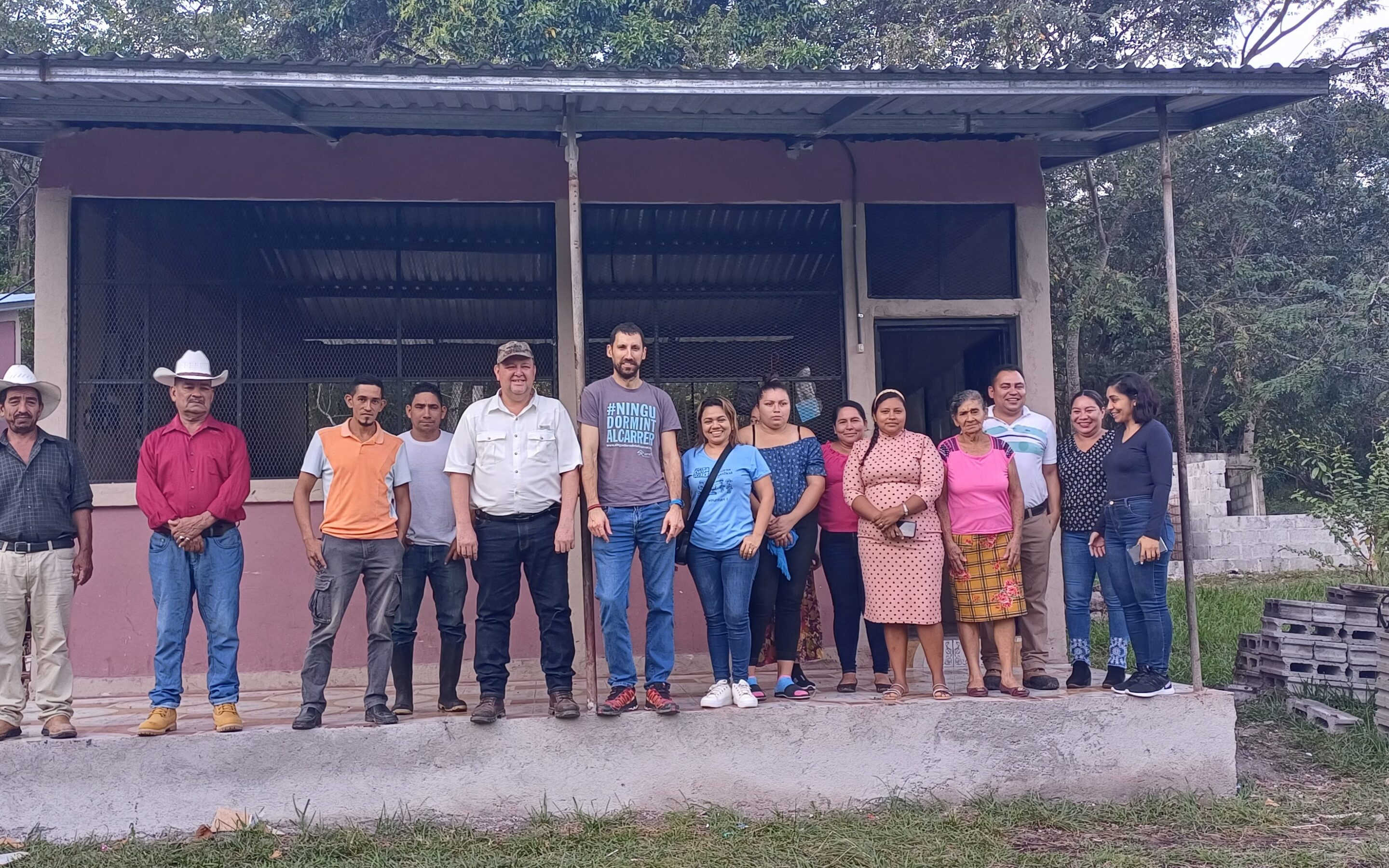
The project enabled the construction of a single building with a total of six classrooms, a staff room and a small storage room. Each classroom has its own bathroom and the entire building is surrounded by a wall to enclose the school playground.

This construction marked a turning point for the school’s pupils and teachers, as the educational environment was completely transformed, which has had a very positive impact on improving the educational conditions for the children in the neighbourhood.

TOWN COUNCILS AND FUNDING ENTITIES

25.000,00 euros (2010)

4.465,00 euros (2010 i 2011)

4.422,78 euros (2010)

2.500,00 euros (2010)
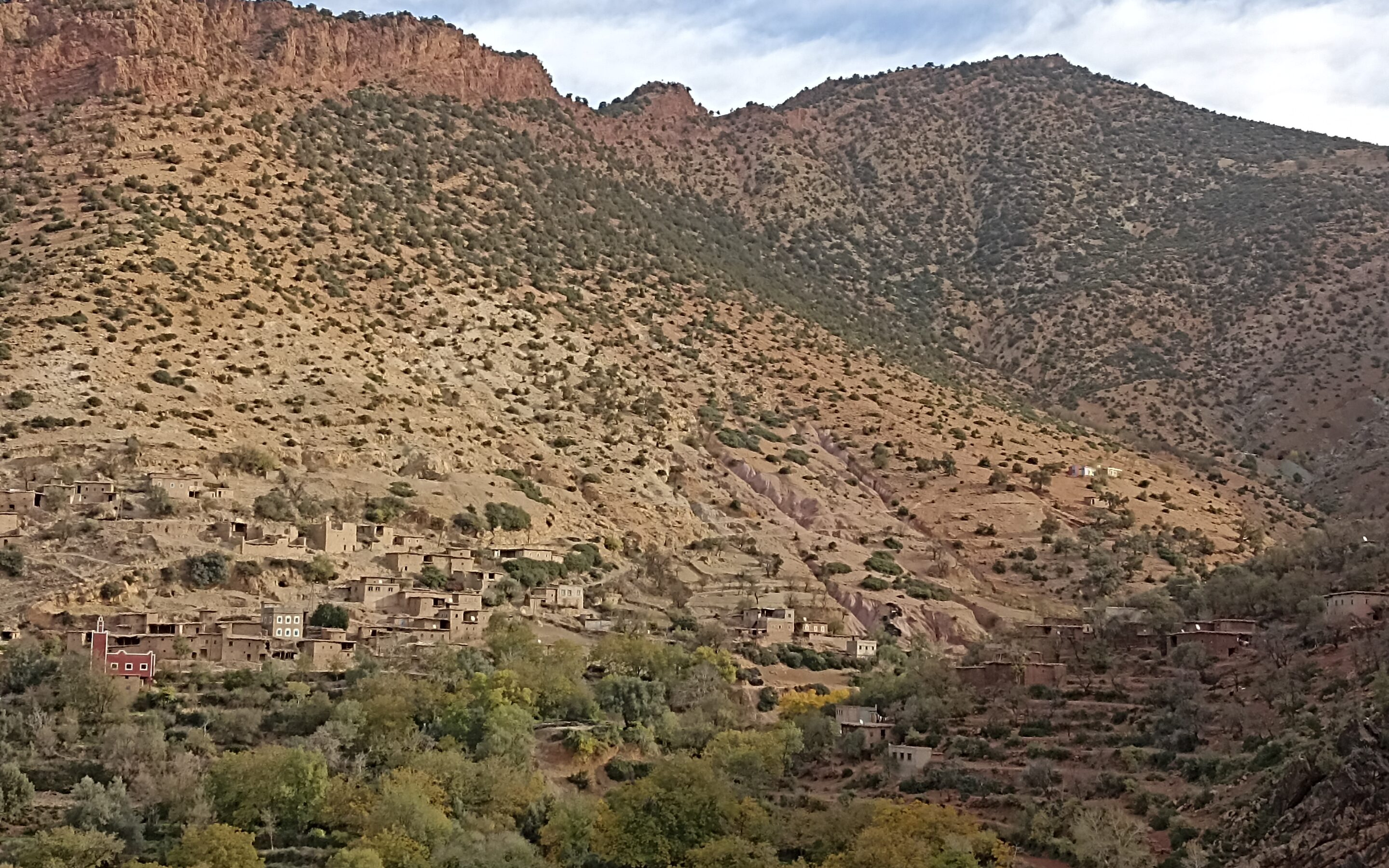
Drinking water supply for the rural population of the douar of Tighmarte (Morocco)

Drinking water supply for the rural population of the douar of Tighmarte (Morocco)

Drinking water supply for the rural population of the douar of Tighmarte (Morocco)

The volunteers of our organisation who make up the Board of Directors and the Projects Committee are committed to collaborating and seeking ways to mitigate the consequences of natural disasters in the event of any international emergency. In this case, following the earthquake in September 2023 in the Marrakech and High Atlas region, it was decided to start working to find partnerships with other organisations and to be able to provide a cooperative response to this disaster, perhaps not in the emergency phase but in the subsequent reconstruction phase. In order to gain a first-hand understanding of the reality of life for the inhabitants of the affected areas, at the end of November, a volunteer, together with members of other organisations, travelled to the High Atlas to explore possible collaborations and identify cooperation projects. In this way, Acción Solidaria y Logística became acquainted with the Association Jeunes de Tighmarte pour le Développement Local and the community of Tighmarte. After learning about their situation, their needs and the effect of the earthquake on the region, it was deemed feasible to initiate a collaboration to support the association’s projects to strengthen and empower the community.

The project is envisaged as a cooperative collaboration between the small community of Tighmarte, made up of 65 families, and our organisation. The local entity that will act as our counterpart is the Association Jeunes de Tighmarte pour le Développement Local. This association has identified the most immediate needs and has prioritised two: the supply of drinking water and the creation of employment in the small douar. This project aims to address the priority of supplying drinking water to the village. Currently, the collection, distribution and storage system is precarious, which means that there is no continuous or sufficient supply for the families in the village, especially in the months of greatest need. An added problem is the quality of the water, as its high lime content causes health problems for the inhabitants. The project aims to improve the infrastructure by building a new reservoir, improving the water supply and reducing the pressure that constantly damages the pipe system. It is also necessary to find solutions to the water quality issue in order to preventively reduce possible health problems for the inhabitants of the douar.

The direct beneficiaries are the entire population of the douar of Tighmarte, comprising 227 inhabitants.

A project supported by:

Improvement of the infrastructure of the Dionisio Herrera rural school in the community of San Miguel in Potrerillos (Honduras).

Improvement of the infrastructure of the Dionisio Herrera rural school in the community of San Miguel in Potrerillos (Honduras).

Improvement of the infrastructure of the Dionisio Herrera rural school in the community of San Miguel in Potrerillos (Honduras).

The project

THE OVERALL OBJECTIVE OF THE PROJECT IS TO CONTRIBUTE TO IMPROVING ACCESS TO EDUCATION AND EDUCATIONAL CONDITIONS FOR CHILDREN IN RURAL AREAS OF HONDURAS.

The community of San Miguel is located in the municipality of Potrerillos (Department of Cortés). It is about 2 km from the town centre of Potrerillos, to which it belongs administratively, but the poor condition of the road makes it difficult for its hundred inhabitants to get around, especially during the rainy season. The lack of services and transport difficulties mean that the population tends to move to more populated municipalities, thus encouraging the depopulation of the community. For this reason, it is considered essential that the school has optimal conditions for learning, thus contributing in a small way to stabilising the population.

WHAT WILL WE DO??

The actions included in this project are:
– Construction of new toilets for the school connected to a new septic tank.
– Demolition, reconstruction and bricklaying of the classroom and meeting room floors.
– Installation of a false ceiling and acrylic windows to improve the classroom’s climate control.
– Installation of a mini-split air conditioning unit in the classroom.
– Renovation of the electrical system in the classroom and meeting room.
– Purchase of new blackboards and furniture for the classroom and meeting room.

In this project, as in all those we carry out in Honduras, we request the participation of both the beneficiary community, through parents, and public administrations, in this case the Municipality of Potrerillos. In this regard, it has been agreed that this administration will cover the cost of renovating the toilets. The community, for its part, will collaborate by providing labour for the work that does not require a technical professional.

A project supported by:

Social and healthcare project at Khagendra Hospital, Kathmandu – Nepal

Social and healthcare project at Khagendra Hospital, Kathmandu – Nepal

Social and healthcare project at Khagendra Hospital, Kathmandu – Nepal

Hospital Khagendra

(Nepal)

2019

Project

In November 2019, a group of three volunteers travelled to Nepal to launch the first phase of the social and healthcare project at the orthopedic hospital in Kathmandu. They took with them a large amount of medical and educational supplies needed to start the planned activities.

For approximately two weeks, they worked on the healthcare aspect, which consisted of developing, together with the center’s own staff, some techniques for treating and caring for patients. They also implemented a practical and visual system for personal hygiene, through training and the distribution of descriptive posters visible throughout the hospital.

At the same time, hey fitted out premises to serve as a classroom and workshop, where users will receive training in new occupational, leisure and therapeutic activities, the use of recycled materials, self-management skills, economics, etc.

Despite the spread of the COVID-19 pandemic, which has made it impossible for our volunteers to travel to continue with the next phases of the project, we have been able to monitor progress through our partners in Kathmandu, who have been sending us regular and comprehensive management reports and photographs on how the project is evolving. We have noted that, in terms of healthcare, recent restrictions on nursing staff at the hospital itself have led to a decline in the services and improvements provided by our volunteers. We hope to be able to resume the project when it is possible to travel to the country again.

In terms of socio-educational aspects, it has been observed that the new techniques, materials and equipment have been very well received, and we can see how users utilize the premises, which have been converted into a workshop, to carry out their occupational activities. They maintain an acceptable level of order in the facilities and take care of the objects they manufacture, distribute and sell. Proof of this is that, through the sale of their products, they have been able to finance the construction of a car park for adapted motorcycles.

Therefore, the project coordination team in Nepal has decided to conclude the first phase of the project. We are waiting for the borders to reopen so that we can continue our work, if possible, both in the health sector and in the expansion of the socio-educational sector, taking advantage of the outdoor spaces available at the center to improve the gardening, horticulture and leisure areas for the hospital’s residents.

200 nens i nenes

Construction of a school in Villanueva

Construction of a school in Villanueva

Construction of the John Cook School in Villanueva

Escola John Cook

Project

THIS IS THE THIRD SCHOOL WE HAVE BUILT FROM SCRATCH IN THE DEPARTMENT OF CORTÉS, SPECIFICALLY IN THE BELLAVISTA NEIGHBOURHOOD, AND IT ACCOMMODATES ALMOST 200 CHILDREN.

Due to the poor condition of the house that had been used as a school until then, in 2012 we decided to build a new building on a nearby plot of land. The school has six classrooms, a kitchen and a computer room, which we equipped with a dozen computers in 2016.

  • More than 45,000 violent deaths in the last 10 years
  • ASL has been working in the country for more than 15 years in 14 schools and medical clinics that have been built or expanded.
200 nens i nenes